
June 13, 2025, marked the official end of the HP Podium Centers True North & Three 10 League. This exciting chapter in the growth of competitive table tennis in Ontario took place at True North Table Tennis Club in Scarborough and My Table Tennis Club in Mississauga. The league united top players, dedicated coaches, and rising talent for a high-performance, team-based season that lasted over three months.
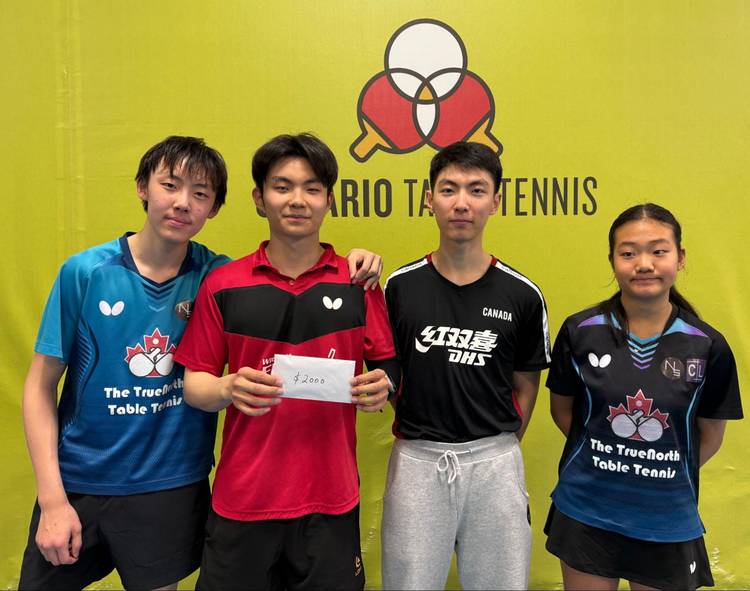
In a thrilling grand finale, Team Valor and True North Dragon competed fiercely for gold. The final score was 2-3 in games, and it came down to a dramatic 7-point tiebreaker. True North Dragon secured a 7-6 victory to take the championship title and claimed a generous prize. However, this league was about more than just the final outcome; it represented a shared vision of sustainable growth, teamwork, and a new competitive model for Canadian table tennis.
The Vision: Leadership from Two Clubs
The league started as a partnership between two ambitious coaches: Eugene Wang from True North TTC and Raymond Zhang from Three10 TTC. Both have long supported the development of young talent in the province. Together, they aimed to create a league that emphasized growth, stability, and community rather than just individual tournaments.
As Coach Eugene stated:
“We wanted to give our athletes meaningful, high-level match play beyond occasional tournaments—something that promotes real growth through weekly challenges.”
Coach Raymond added,
“This league is about more than winning. It’s about getting our players ready for the national stage and building a culture of excellence and responsibility. Ontario has the talent; it just needs the right structure.”
These words laid the groundwork for how the league operated, and set the principals of this league.
A League With Purpose: Consistency, Competition, Community
Unlike typical one-off tournaments, the True North & Three10 League provided players with weekly competitive play that mirrored professional and international formats. With support from the Ontario Table Tennis Association, the league focused on offering athletes consistent, structured, and meaningful match experiences. The aim was to improve long-term player development while creating a sense of team identity within their corresponding teams.
This league was more than just a competition; It was a launchpad for what professional and high-performance table tennis in Canada could become.
Eight Teams, One Goal
The league consisted of eight teams, each mixing competitive and recreational players from across the Greater Toronto Area (GTA):
- KJ Auto Team
- Skywalker
- Team Captain
- Team Valor
- Three10 – A
- Toronto Boars
- True North Dragon
- True North Titans
Each team had 4-5 players, and the teams were co-ed to ensure gender representation and inclusivity. Many players were already strong competitors at the provincial and national levels, while others were newer athletes eager to challenge themselves and grow. This inclusive setup created an environment where learning, support, and sportsmanship thrived.
The Format: Inspired by the Best
Starting February 26, 2025, every Wednesday evening, all eight teams came together for a night of competition. Matches followed a best-of-five team format, featuring five specific games in this order:
- Mixed Doubles
- Singles 1
- Singles 2
- Singles 3
- 7-Point Game*
Even if one team reached three wins early, all five matches were played during the round-robin stage. This maximized match experience for all players. League rules also required that each team include a female athlete in one of the singles matches. Additionally, players could only compete in two matches per team event, including one singles. These regulations ensured fair play and diverse participation during the league.
*A notable aspect of the format was the 7-point game. This exciting tiebreaker only required the first player to reach 7 points to win. There is no deuce, only one serve per player, and players switched sides when one reached 3 points. This mini-match added a lot of tension and excitement to close encounters, becoming a crowd favorite and often deciding matches, as seen in the finals.
My Personal Experience as a Participant
As a player in this league, I can confidently say it has been one of the most rewarding and memorable experiences of my table tennis journey. Each week challenged my skills under pressure: adjusting strategies, learning from teammates, and refining both my technique and mindset. I learned to manage tight games, support teammates after tough losses, and celebrate our shared victories. Even when we didn’t win, we gained valuable lessons that only real competition can provide.
What stood out most wasn’t just the excitement or the level of play but the community. Players, coaches, and organizers all shared the same goal: to grow the sport and support one another. It felt like we were part of something important and new. That made every point feel like progress, not just for me but for table tennis in Ontario.
Beyond Scores: A Model for the Future
While the final match scores and individual stats tell part of the story, the real success of the HP Podium Centers True North & Three10 League lies in the environment it created. A consistent, structured league brought routine, responsibility, and pride to everyone involved. Players knew they had a chance to grow, challenge themselves, and contribute to something bigger.
As table tennis in Canada gains visibility and momentum, initiatives like this are vital. They lay the foundation for stronger clubs, better athletes, and deeper engagement. Most importantly, they demonstrate that sport is not just a test of talent; it’s the journey that builds character, resilience, and growth that goes far beyond the game.
Ruoyan Yang